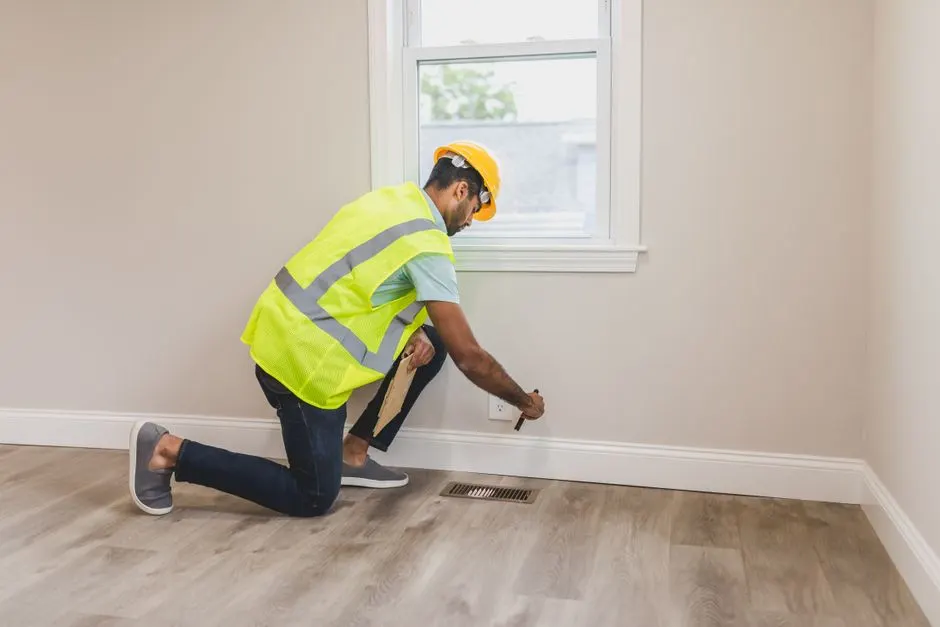
Slab leaks under Newnan foundations are pressurized water line failures that happen beneath the concrete floor of your home, and they almost never announce themselves the way a burst pipe in a wall does. Instead, you get a water bill that jumps $60 to $140 in a single month, a warm patch on the bathroom tile, or the faint sound of running water at 2 a.m. with every fixture shut off. This guide walks through what causes them, how we find them without tearing your house apart, what repair costs in 2026, and the signs that mean you should stop waiting and call someone today.
What a Slab Leak Actually Is
A slab leak is a failure in the hot or cold water supply line that runs through or directly beneath the concrete foundation of your home, and it is different from a drain leak because the pipe stays under constant pressure. That pressure is why a pinhole the size of a pencil tip can push 30 to 80 gallons of water into the soil under your floor every day.
Homes built on slab foundations - which is most of Newnan west of the railroad and nearly everything in SummerGrove - have no crawlspace to inspect. The copper or PEX line is poured into the slab or run through a channel beneath it. When it fails, the water has nowhere to go but into the soil, the base of your walls, and eventually your flooring.
We handle these calls year-round, and the pattern is consistent: the leak has usually been running for three to six weeks before the homeowner notices anything. That is the hidden part. By the time water reaches the surface, the damage underneath has a head start.
Why Slab Leaks Happen in Newnan Homes
Slab leaks in Newnan trace back to four causes, and the age of your house usually tells you which one you are dealing with.
Aging copper lines
Homes built in Newnan between 1965 and 1995 - a big chunk of the inventory around Downtown Newnan and the older streets off Jackson - were plumbed with copper. Copper is durable, but 30 to 50 years of slightly aggressive water will thin the pipe wall from the inside. Once it thins to a few thousandths of an inch, a pinhole opens. We see this most in homes past the 35-year mark.
Soil movement and settling
Newnan sits on a mix of Georgia red clay and pockets of rock. Clay expands when it is wet and shrinks when it dries, and our summers swing hard between the two. That cycle flexes the slab and the pipes inside it. Over a decade or two, the abrasion wears through the pipe where it contacts gravel or rebar.
Water chemistry
Coweta County water is treated and generally balanced, but homes on private wells around the edges of the county often have higher mineral content or lower pH. Low pH is the aggressive one - it eats copper. If you are on a well and your pipes are original, that is a factor worth knowing.
Poor original installation
Copper that was laid directly against concrete, or PEX that was kinked during the pour, fails early. We find these in homes from the 2000s building boom where the line was run too tight against the slab edge.
How Do I Know If I Have a Slab Leak in Newnan?
You know you likely have a slab leak in Newnan when two or more of these signs show up at the same time - one alone can be something else, but two together almost always points under the slab.
- Water bill spike. A jump of $50 to $150 over your normal month with no change in habits is the single most common first signal.
- Warm spot on the floor. If the hot line is leaking, the tile or hardwood above it will feel warm to the touch - sometimes 10 to 20 degrees warmer than the surrounding floor.
- Sound of running water. With every faucet, toilet, and appliance off, you can still hear water moving. Put your ear to the floor near the water heater.
- Damp or buckling flooring. Laminate and hardwood cup and lift. Tile grout cracks in a line. Carpet feels cool and damp in one spot.
- Mildew smell with no visible source. That musty odor in a hallway or closet with no plumbing nearby is often water wicking up from below.
- Cracks in the slab or exterior brick. A stair-step crack in the brick veneer or a new crack across the garage floor is worth investigating.
If you have two or more of those, do not wait for the floor to feel wet. Water under a slab does not dry out on its own.
How to Detect a Slab Leak Under a Newnan Foundation
Detection is the part most homeowners worry about, because the mental image is a crew jackhammering the whole living room. That is not how it works anymore. We start with a Slab Leak Detection Newnan GA survey that narrows the leak to a square foot or two before anyone touches concrete.
Here is the sequence we run on a typical Newnan home:
- Meter test. Shut off every fixture in the house and watch the water meter. If the low-flow dial is still turning, you have a supply-side leak. This takes five minutes and costs nothing.
- Acoustic listening. We use a ground microphone to pick up the hiss of pressurized water through the slab. Copper leaks are loud; PEX leaks are quieter and need a more sensitive pickup.
- Thermal imaging. An infrared camera reads the temperature difference between the leaking hot line and the surrounding slab. This is the fastest way to map a hot-water leak.
- Pressure isolation. We isolate the hot and cold systems separately to confirm which line is leaking, then zone it down to a single run.
- Electronic tracing. For PEX and hard-to-hear leaks, we send a signal down the line and follow it with a receiver to pinpoint the failure point.
Once we know the location, we can talk about repair options with real numbers instead of guesses. If you want a full picture of the home's plumbing before we start cutting, we also offer Plumbing Diagnostic Services Newnan GA that cover the supply lines, drains, and water heater in one visit.
Can a Slab Leak Cause Foundation Damage in Newnan?
Yes - a slab leak can cause foundation damage in Newnan, and it is the reason we treat these as urgent rather than routine. The mechanism is soil saturation, not the water itself.
When water escapes under your slab for weeks, the clay soil beneath it swells. That swelling lifts part of the foundation while the rest stays put. You get differential movement - the kind that cracks brick, jams doors, and pops tile. On the flip side, if the leak is on the hot line and the soil dries out around it, the clay shrinks and the slab drops into the void.
Either direction is expensive. Foundation repair in this part of Georgia runs $4,000 to $15,000 depending on how many piers are needed. Catching the leak at week two instead of week eight is often the difference between a $1,800 pipe repair and a five-figure foundation job.
There is also a mold angle. Water wicking up through the slab into carpet, drywall, and baseboards creates the conditions for mold growth within 24 to 48 hours of sustained moisture. If you smell mildew and cannot find the source, that is a leak indicator, not a cleaning problem.
How Much Does Slab Leak Repair Cost in Newnan Georgia?
Slab leak repair cost in Newnan GA depends on which repair method fits your situation, and there are three realistic options. Here is what typical 2026 pricing looks like in this area.
- Spot repair (jackhammer and patch). $1,200 to $2,800. We open the slab at the leak point, cut out the failed section, replace it, pressure-test, and pour the patch. Fastest option, but it only fixes the one spot - if the pipe is 40 years old, another pinhole is likely within a few years.
- Under-slab pipe repair and drilling. $2,500 to $5,500. We tunnel or drill under the slab to reach the line without breaking up the whole floor. Less disruption to flooring, and it lets us replace a longer run of pipe. This is our go-to for leaks under finished living space.
- Piping re-routing and replacement. $4,500 to $9,000. We abandon the failing line under the slab entirely and run new PEX through the attic or walls. Best long-term answer for a home with a history of leaks or original copper throughout.
Detection itself runs $250 to $600 and is usually credited toward the repair if you hire us to do the work. Every job starts with a written flat-rate price before we cut anything.
One note on insurance: most homeowner policies cover the water damage from a sudden slab leak but not the pipe repair itself. We document the leak location and cause so you have what you need to file.
What to Watch Out For
Three mistakes cost Newnan homeowners the most money on slab leaks, and all three are avoidable.
Waiting for visible water. By the time water reaches the surface of your floor, the soil under the slab has been saturated for weeks. The visible stage is the late stage.
Hiring a repair without proper detection first. If a contractor wants to start jackhammering without an acoustic or thermal survey, walk away. Guessing at the location means cutting in the wrong place, and you pay for every square foot of concrete they open.
Spot-patching a 40-year-old copper system. A spot repair on a pipe that is already failing in one place will fail again in another. If your home was built before 1990 and this is the second leak, replacement is usually the cheaper path over five years.
One more: do not shut off your water and hope it stops. A pressurized supply line under a slab does not heal. It grows.
When to Call a Professional
Call us when you have two or more of the warning signs above, when your water bill jumps more than $50 in a month with no explanation, or when you hear running water with everything off. Those are the triggers.
We handle slab leaks under Newnan foundations every week - from the 1950s ranches near Downtown Newnan to the newer builds out in SummerGrove. We find the leak, fix it, and pressure-test the line before we leave. If the repair needs a permit, we pull it. If the leak has already damaged flooring or drywall, we tell you what we see and what it will take to dry it out.
You do not need to know which repair method you want. That is our job to figure out and explain in plain terms.
Frequently Asked Questions
What causes slab leaks in Newnan GA?
Four causes dominate here: aging copper lines in homes built 1965-1995, soil movement from Georgia red clay expanding and shrinking, aggressive water chemistry in well-fed homes, and installation defects from the 2000s building boom. Copper past 35 years old is the most common single cause we find.
How much does slab leak repair cost in Newnan Georgia?
In 2026, spot repairs run $1,200 to $2,800, under-slab drilling runs $2,500 to $5,500, and full re-piping runs $4,500 to $9,000. Detection adds $250 to $600 and is usually credited toward the repair. Your exact price depends on leak location and pipe material.
Can a slab leak cause foundation damage in Newnan?
Yes. Sustained water under the slab swells the clay soil, which lifts part of the foundation while the rest stays put. That differential movement cracks brick, jams doors, and pops tile. Foundation repair afterward runs $4,000 to $15,000, so catching the leak early matters.
How do I know if I have a slab leak in Newnan?
Watch for a water bill jump of $50 to $150, a warm spot on the floor, the sound of running water with everything off, or damp and buckling flooring. Two or more of those together almost always means a leak under the slab. A five-minute meter test confirms it.
How long does slab leak repair take?
Detection takes one to two hours. A spot repair is usually a one-day job. Under-slab drilling takes one to two days, and full re-piping takes two to four days depending on house size. We give you a clear timeline before we start.
Get Help with Plumbing in Newnan
If your water bill jumped, your floor feels warm, or you hear water running when nothing is on, call Slab Leak pros at 555 1234567. We serve Newnan and the surrounding Coweta County area with same-day slab leak detection and flat-rate repair pricing.